

How To Draw A Simple Cat Face
How to depict a cat
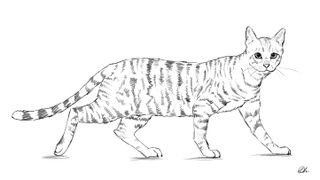
Want to know how to draw a cat? You lot've come to the right place. Drawing animals can exist catchy but information technology'southward also rewarding once you get it right. In this tutorial, we'll show you how to draw a cat so that it looks realistic and convincing, even in sketch class. To make your image look as lifelike every bit possible, we'll cover observation, quick sketching, recognising structure and refining your drawing.
Many people think that because animals are covered in fur you don't need to worry nearly their structure or anatomy. Just the elevation tip for drawing an animal is to maintain a practiced understanding of the structure underneath the fur. So, let'southward take a await at the steps you need to follow to learn how to draw a believable true cat. For more cartoon tutorials, encounter our complete guide to how to draw.
01. Collect reference photos

The best manner to familiarise yourself with a cat's anatomy is to find a number of photos of cats in random positions – the more positions you can find the better. This helps you form a better understanding of how cats move, sit, spring, and so on. You can also find your ain pets or a simple Google or Pinterest search volition do if you don't have your own photos. The important affair to understand is that no matter how big or hirsuite they are, all cats move in pretty much the same style.
02. Commencement with quick sketches
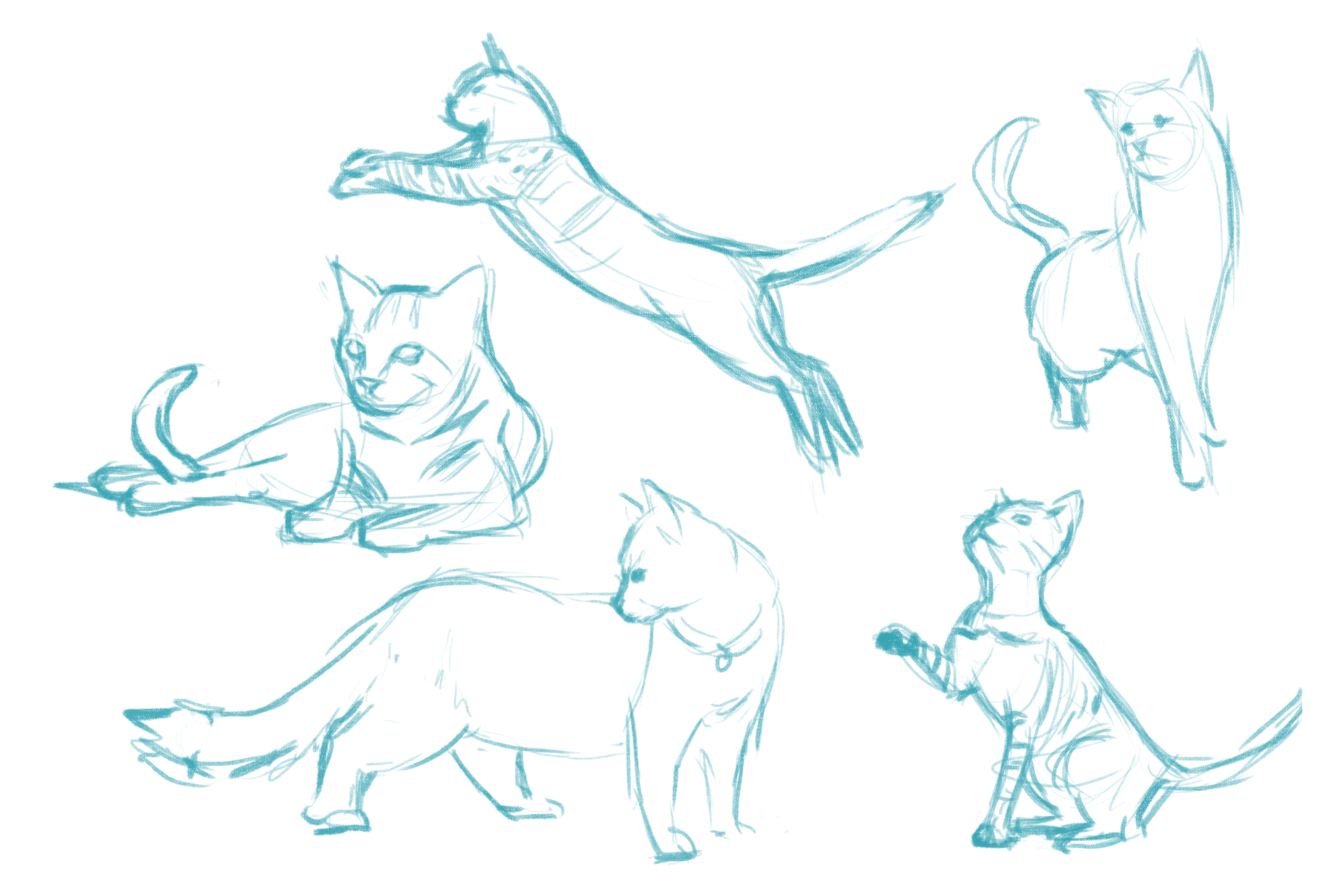
Try chop-chop sketching some of the poses from your references. Don't focus on the precision of the lines but try to quickly capture the essence of the moves. These initial sketches volition give you a better idea of the true cat's structure because nosotros acquire quicker by drawing rather that just observing.
To benefit from this do even further, you may want to slightly exaggerate the motion of the cat similarly to in cartoons. This can assistance you improve sympathise the movements of the animal and the way their bodies work.
03. Pick a pose
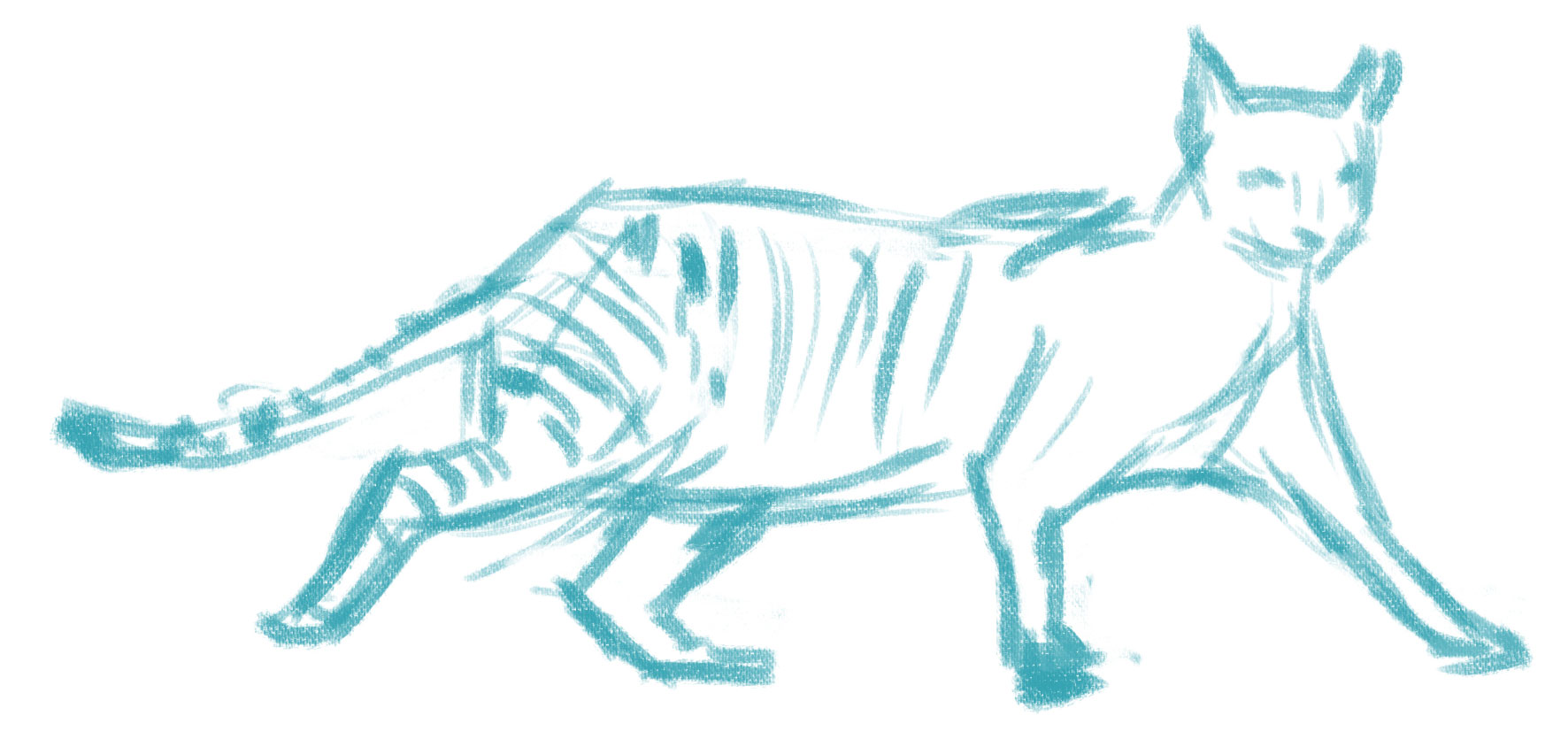
When you lot've done some sketches, it'due south time to choose a pose. I decided to become for both a walking pose and a side view. This volition prove off the anatomy of the animal and make for a prissy clearer demonstration of the drawing process.
04. Draw the skeleton
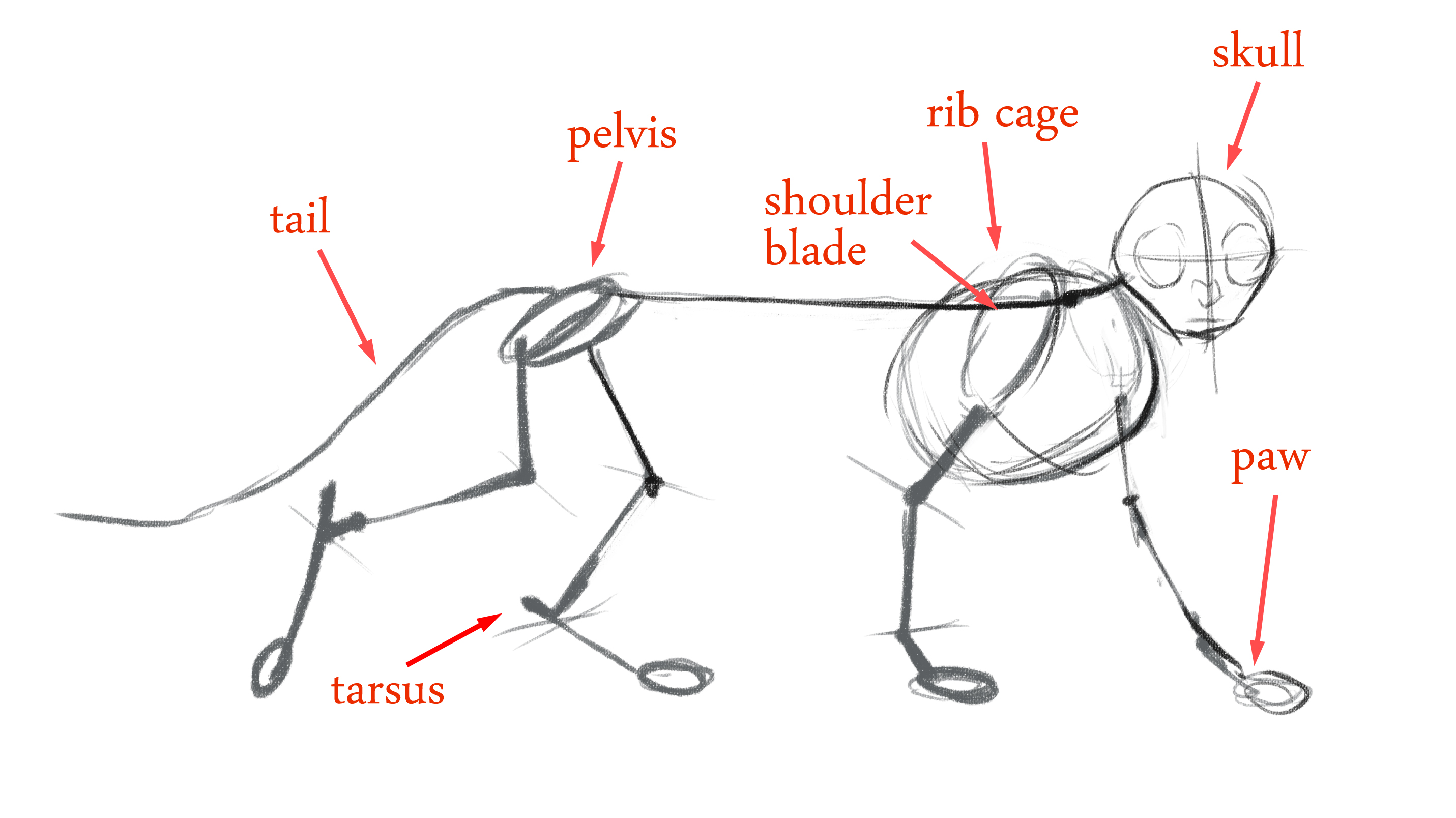
To find the structure, you need to start with cartoon a proper cat skeleton. Y'all can notice many drawings of an anatomically right skeleton online, simply these will include much more than information than you really need. Detect the proportions betwixt skull, ribcage and pelvis as well as the distances between them. Observe how many joints cats' front and dorsum legs have and which mode they bend. Discover the tarsus bone in the back leg, protruding backwards – this plays a large function in how this part of a leg is shaped.
Now draw out a simplified version of the skeleton. If you work digitally, draw your skeleton sketch on a carve up layer. If you piece of work in pencil, describe lines very lightly so that they don't overpower the final drawing, you can always erase them subsequently.
- The best pencils for colouring, drawing and sketching
05. Add together some muscles

The adjacent step is to add some muscles to your skeleton. As before, I'm not suggesting drawing all of the muscles – this stage is about capturing the shape of the cat and establishing its proportions.
Utilize broader strokes to find shapes of the legs and pay attention to how the flow of lines changes around joints. Make sure the shapes feel total and vigorous and avoid wobbly or uncertain lines. Nether all their fur, cats are very muscular and sturdy.
06. Focus on distribution of weight
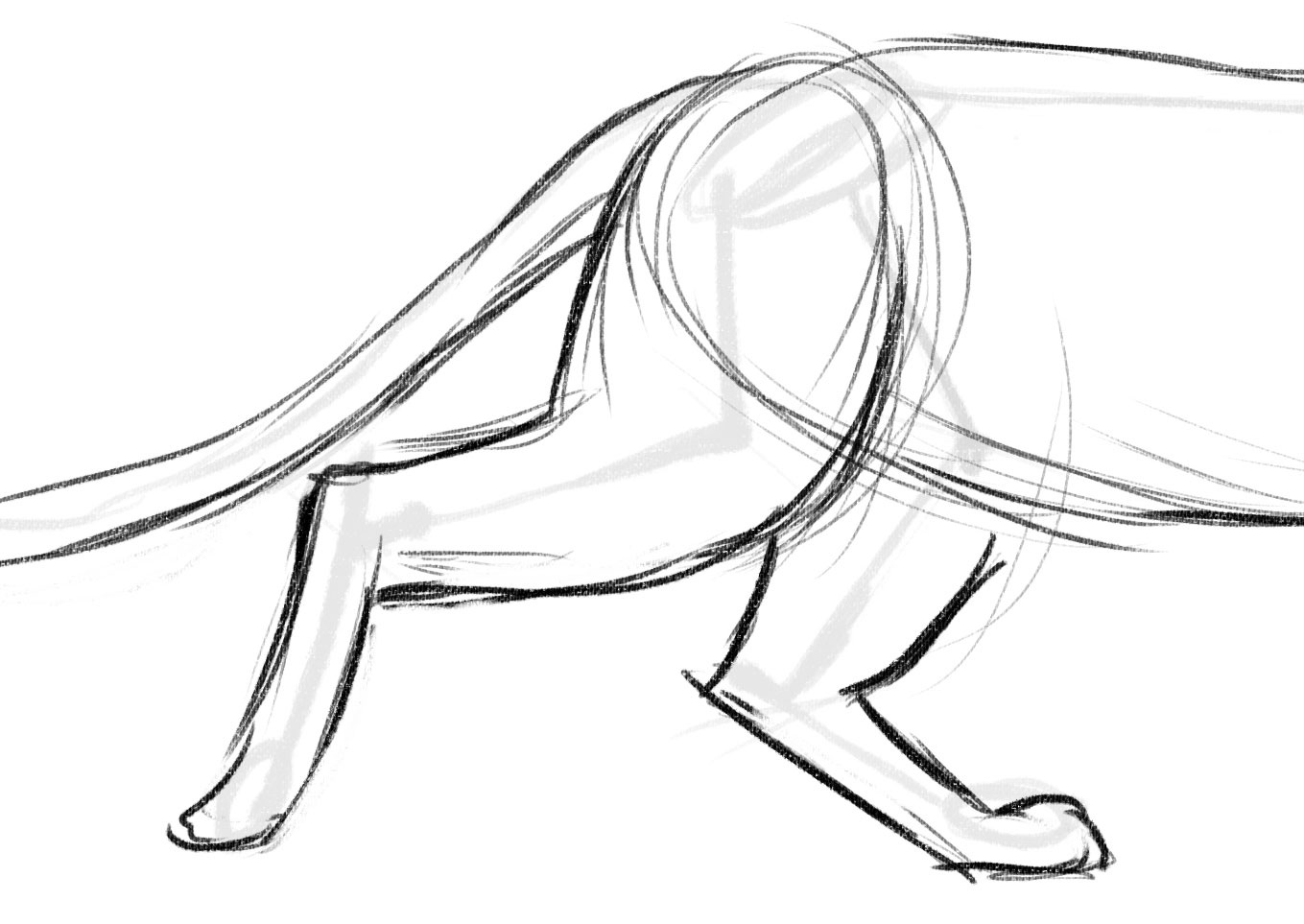
Since we're drawing our cat in movement, each leg is performing a different task and carries a different load of weight. The back left and the front right leg are conveying about of the weight and help the cat with its balance. The other two opposing legs are more relaxed.
The front left mitt – while it still carries a bit of weight – is reaching out forwards to plant another step. The back correct paw is finishing the previous step and is nearly to be lifted off the basis completely. Paying attending to details like this is primal to creating a lifelike cartoon.
07. Draw the face
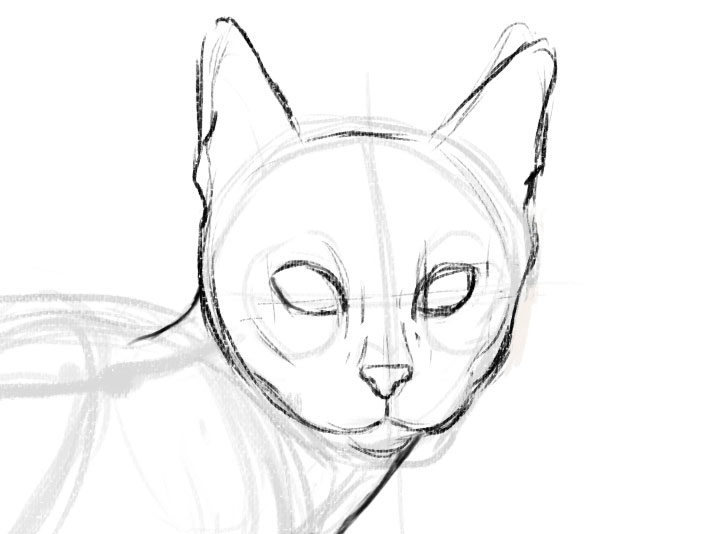
Getting your cat'southward head in proportion is very important. Brand sure you pay attending to proportions between ears, eyes, nose and mouth – it's easy to fall into a clichéd approach, and give your true cat a actually big nose, large eyes and cute small ears.
Depending on the species of true cat, the size of the ears can vary. In this example the ears are bigger than you may recollect, so make certain to compare them with the rest of the caput. Also find how the head connects to the neck, and how the neck extends into the breast.
08. Get the eyes right
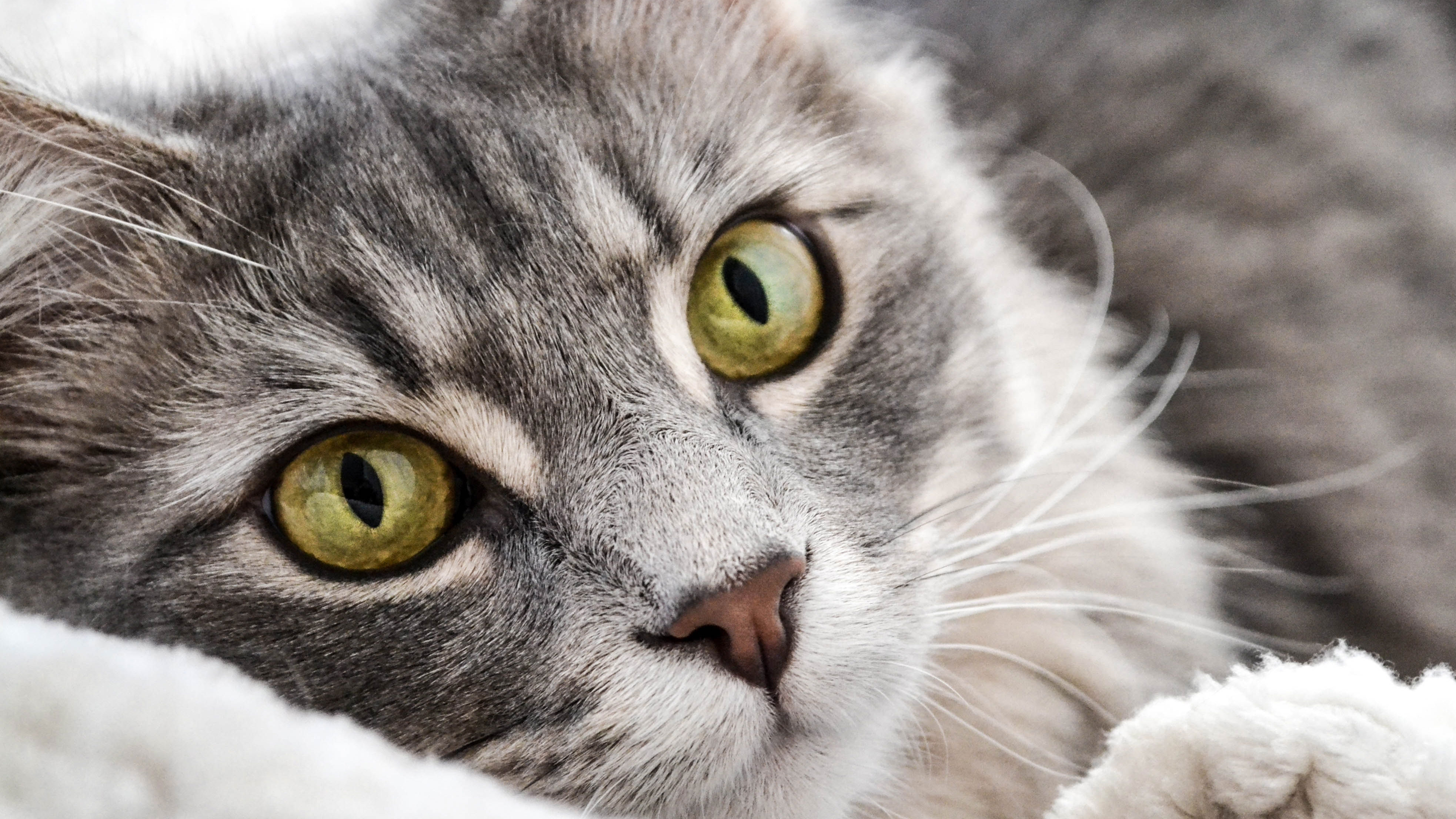
Cats' optics often seem bigger because of the colour or patterns of the fur around them. In addition, the irises extend over the whole visible part of the eye, which also creates the feeling that the optics are very prominent.
09. Refine the facial features
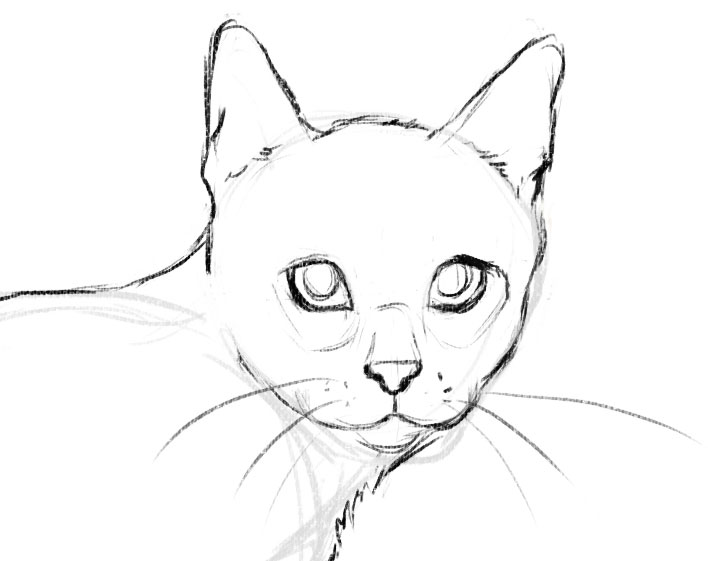
At present is the time to describe with thicker, darker and more defined lines. If y'all're working traditionally, swap to a thicker pencil and use more pressure level. If you're working digitally, switch to a new layer while keeping previous layers on a lower opacity.
Refine the shapes of the eyes, mouth and olfactory organ (notice how this resembles the alphabetic character 'T'). Add pupils to the eyes. Depending on the true cat you may choose to sketch the optics more than narrow or more open. Don't forget about the whiskers – they brand a huge deviation!
x. Add some fur

Now you have the anatomy in identify all yous need to do is add a layer of skin and fur to the body and refine the shapes of the head. Remember that, except for a couple of species, about cats have fur all over their bodies.
Cats' fur tends to vary in thickness depending on the body part it's covering: it's shorter effectually the head and paws and gets thicker and longer in the trunk, especially on the belly and tail. Use small strokes to signal texture.
Likewise notice how the pare behaves on the animal depending on the position it'due south in. In this pose, on the front left and back correct leg the skin gets stretched, while behind the right front leg it wrinkles.
xi. Add the last touches
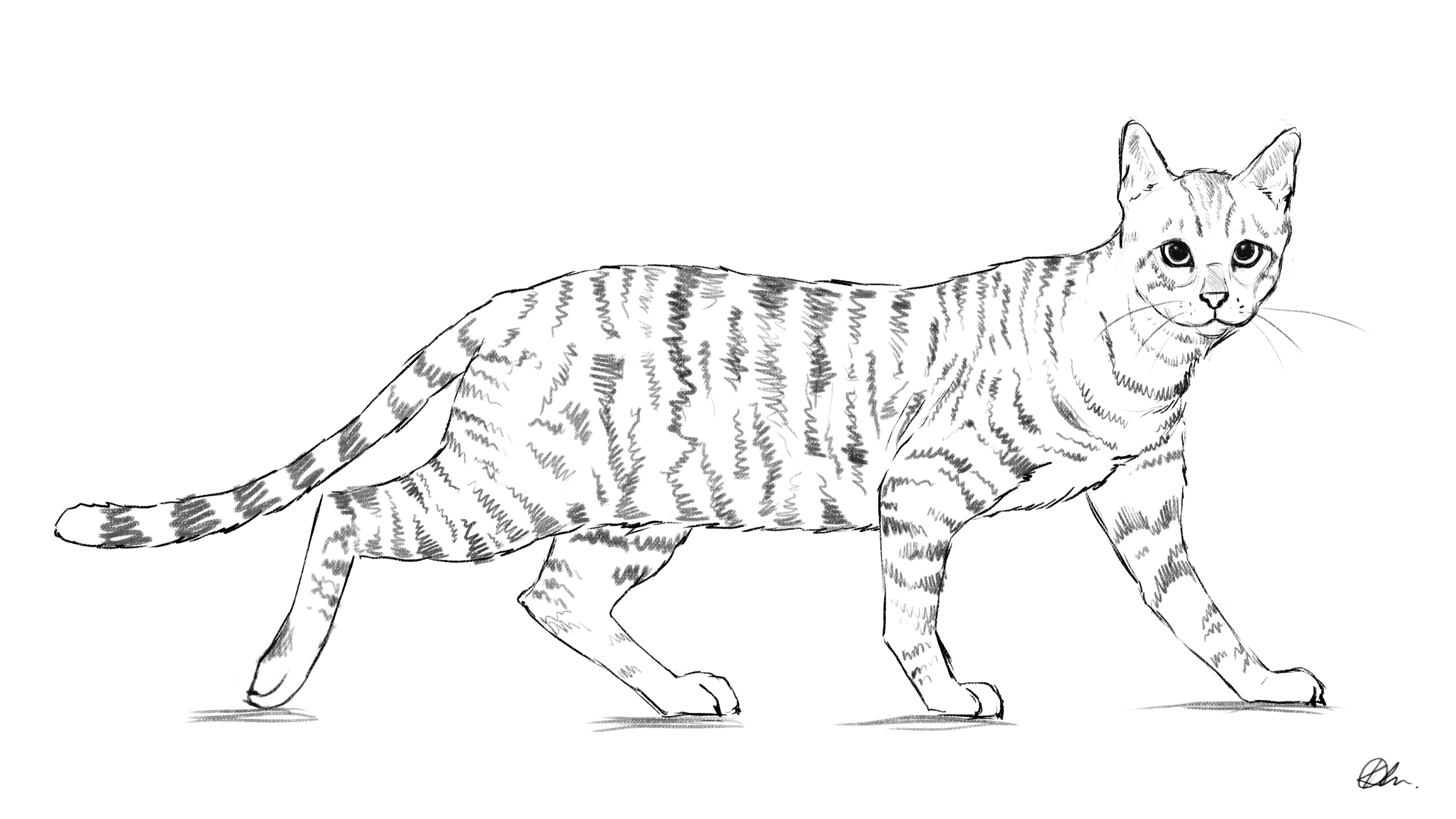
If the cat you lot're drawing has characteristic patterns on their fur, add these on top. Erase the more prominent sketch lines (if working in pencil) or turn off the sketch layers (for digital artists).
In this case I decided to draw stripes on my cat. Be careful how dark you draw features like stripes, as they can rapidly overpower the whole cartoon. Use subtle shading lines, and make sure to follow the forms of the cat's body. Drawing fur patterns – especially stripes – tin add a lot of depth to your sketch. However, if washed incorrectly, it may unintentionally flatten the prototype.
Try to vary the length, width and shapes of your true cat'south stripes. They usually get thicker on the tail, body and upper limbs and thinner around the head and lower paws. Final simply not least add a little shadow under your cat's paws to point the ground and you are washed!
Read more than:
- How to draw a person
- How to describe a domestic dog
- The 11 best cartoon books
Related articles

Source: https://www.creativebloq.com/how-to/draw-a-cat
Posted by: eppsreck1993.blogspot.com
0 Response to "How To Draw A Simple Cat Face"
Post a Comment